Starvard University · Parenting
Raise kids who become good adults. Twelve plain-English lessons on calm, connection, boundaries, and playing the long game. Perfect parents do not exist. Present ones do.

The whole course in brief
The twelve lessons
Lesson 1
Kids do not need perfect parents. They need safe ones. Felt safety means your child believes, deep down, that you are on their team, that home is the place where they are known and not in danger of losing your love. A child who feels safe takes healthy risks, tells the truth, and comes to you when things go wrong. A child who does not will still survive, but they will do it by hiding.
Safety is built in small moments, thousands of them. Getting down to their eye level. Believing them before correcting them. Being the calmest person in the room when they are the loudest. Keeping your word about small things, because small promises kept are how trust is measured. None of this requires money or special talent. It requires presence, which is the one thing kids can always tell is real or fake.
Safety does not mean no conflict. It means conflict without fear. You can be firm, you can be frustrated, you can say no a hundred times a day. What breaks safety is contempt, unpredictability, and love that feels conditional on performance. Your child should never have to earn your basic warmth.
Lesson 2
Children borrow their parents' nervous systems. When you are regulated, they can regulate. When you lose it, they lose it harder, because they have fewer tools than you and they are reading your face for cues about how dangerous this moment is. You are the thermostat of the house. Set the temperature on purpose.
This does not mean never feeling angry or frustrated. It means having a plan for those feelings before they arrive. Slow your breathing. Lower your voice instead of raising it, which sounds impossible until you try it and watch a screaming child get quieter to match you. If you are about to explode, say so out loud: "I am getting frustrated, I need one minute." Then take it. Naming it teaches them the skill too.
On the days you fail, and you will, remember Lesson 4: repair. But prevention beats repair. Sleep, food, and margin in your schedule are parenting tools. The parent who is rested and unhurried is a different parent than the one running on fumes. Taking care of yourself is not selfish parenting. It is the foundation of it.
Lesson 3
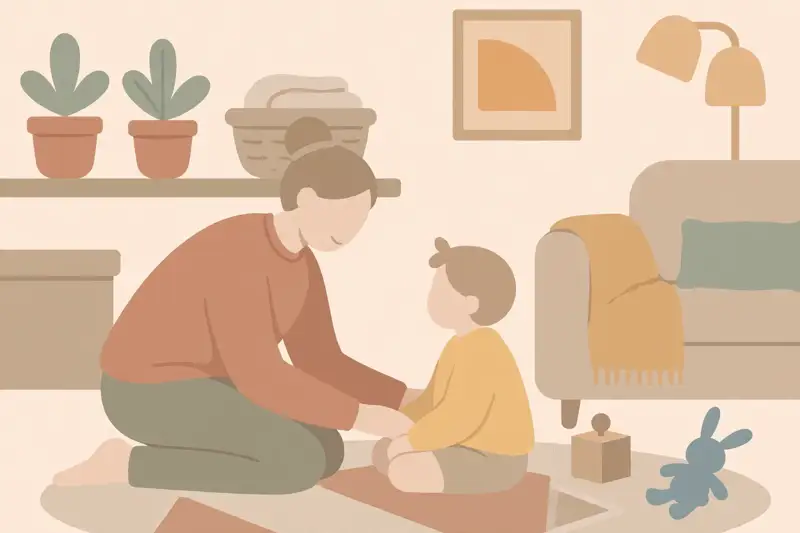
Kids need boundaries the way plants need a trellis: something firm to grow against. The research is remarkably consistent. Children raised with clear expectations and warm enforcement do better on nearly every measure than children raised with either harshness or no limits at all. Boundaries are not the opposite of love. They are love with edges.
Make the rules few, clear, and predictable. Five rules a child can recite beat fifty they cannot remember. State them positively when you can: "we walk inside" instead of "no running." Enforce them the same way every time, because inconsistency teaches kids to test harder. And deliver them kindly. You can be completely firm in a completely warm voice. "I know you want the tablet. The answer is still no. I love you." That is the whole technique.
Expect testing. Testing is not defiance, it is research: "Is this rule real? Is this parent solid?" Every time you hold a boundary kindly, you answer yes to both, and the testing decreases. Every time you cave after the tenth ask, you teach them that the price of a yes is ten asks. Be boring. Be consistent. It works.
Lesson 4
You will yell. You will be unfair. You will have the day where everything goes wrong and your child gets the worst of you. Here is the good news: the rupture is not the problem. The unrepaired rupture is. Children do not need parents who never fail. They need parents who fail and fix it, because that is where they learn that mistakes are survivable and relationships are repairable.
A real apology to a child has three parts, same as to an adult. Name what you did: "I yelled at you and that was wrong." Take responsibility without excuses: not "I yelled because you would not listen," just "I yelled and I should not have." Then repair: "I am sorry. How can I make it better?" Keep it short. Do not make your child comfort you about your guilt. That reverses the roles.
Watch what this teaches. Your child learns that strong people admit mistakes, that sorry means changed behavior, and that love survives conflict. One sincere apology teaches more about character than a hundred lectures on being kind. Repair is the most powerful parenting tool you own.
Lesson 5
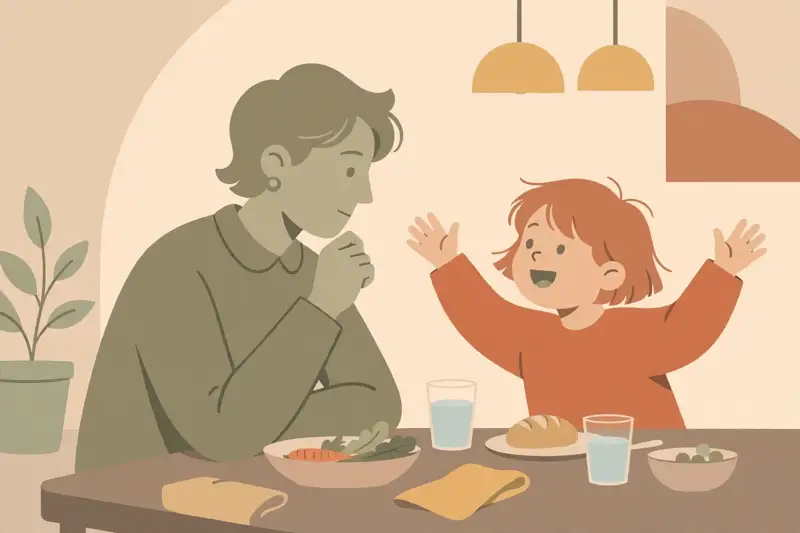
Every parent wants their teenager to come to them with the big stuff. That habit is built when they are small, in the thousand tiny moments when they tell you something boring and you actually listen. The child who learns "mom and dad care about my little things" becomes the teen who believes "mom and dad can handle my big things."
Listening well is a skill with rules. Stop what you are doing, or at least look up. Reflect before you fix: "That sounds really frustrating" before "here is what you should do." Most of the time, kids are not asking for solutions. They are asking to be understood. Ask one more question than feels natural. And never, ever punish a child for telling you the truth. The moment honesty gets punished, the truth-telling stops.
Protect the low-pressure moments. Car rides, walks, doing dishes together: these are when kids talk, because there is no eye contact and no agenda. Guard them. Put the phone down in the car. The best conversations of your parenting life will happen staring at a windshield.
Lesson 6
The hardest part of parenting is watching your child struggle and not fixing it. But struggle is where capability is built. The child who is never allowed to fail never learns they can survive failing, and that lesson is worth more than any trophy. Your job is not to remove obstacles. It is to be the safe base they return to after tackling them.
Practice graduated independence. Let the toddler pour the water, spill it, and clean it up. Let the eight-year-old forget the homework and face the teacher. Let the teen handle the awkward phone call. Step in for danger, not discomfort. Ask yourself: "Is this unsafe, or just hard?" If it is just hard, your hands stay in your pockets and your encouragement stays loud.
Praise the effort and the strategy, not the talent. "You worked really hard on that" builds a child who tries again. "You are so smart" builds a child who avoids anything that might prove otherwise. Kids who believe ability grows from effort take on harder things. That belief will carry them further than any head start you could engineer.
Lesson 7
Before you analyze a behavior problem, check the basics. A shocking amount of "defiance," "attitude," and meltdowns is just tired and hungry wearing a costume. Kids, especially small ones, cannot tell you "my blood sugar crashed." They show you, loudly, at the worst possible moment.
Protect sleep like it is sacred, because for a growing brain it is. Keep bedtimes consistent, even on weekends, within an hour. Build a wind-down routine and guard it. A well-rested child is a different child: more patient, more reasonable, more fun. Most parents who fix sleep report that half their behavior problems simply evaporate.
Feed them real food on a rhythm. Regular meals with protein keep moods stable. Keep the sugary stuff as an occasional treat, not a daily staple, and do not make food a battlefield. Offer good options, eat them yourself, and let appetite do the rest. You are not just feeding a body. You are teaching a relationship with food that lasts a lifetime.
Lesson 8
Screens are not neutral. The apps your kids use were designed by thousands of engineers whose job is to keep eyes on the screen as long as possible. Your child is not the customer. Your child is the product. Parent accordingly, without panic and without surrender.
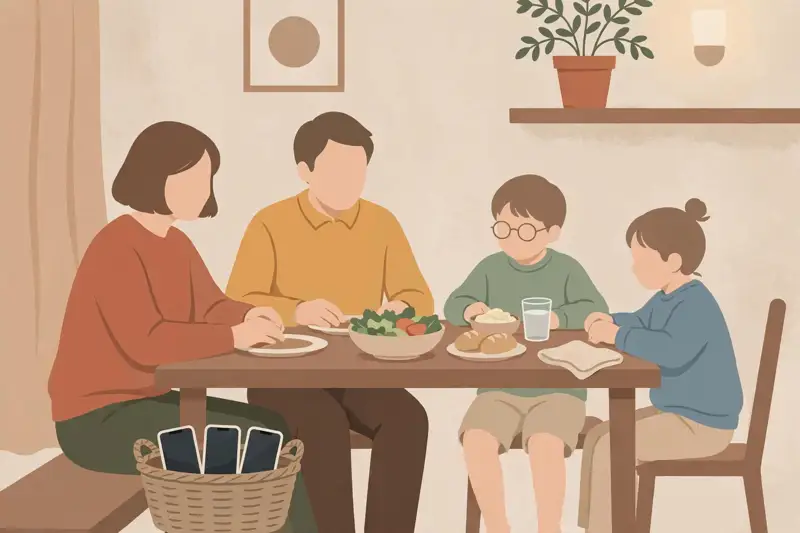
Set the rules early and hold them: no phones at the table, no phones in bedrooms overnight (charge them in the kitchen), and delay the smartphone as long as you can. Every family has its own line, but the families who are happiest with screens are the ones who decided the rules before the device arrived, not after the addiction did. Model it yourself. You cannot credibly limit screens while staring at your own.
Fill the space screens would take. Boredom is not the enemy; it is the doorway to creativity, reading, friendship, and outdoor play. A child with a bike, a library card, and friends does not miss the tablet. And stay in the loop: know what they watch, who they talk to, and keep the conversation open so they tell you when something weird happens online. Because something weird will happen online.
Lesson 9
Punishment is about making a child suffer for what they did. Consequences are about teaching them what happens because of what they did. The difference matters enormously. Punishment breeds resentment and sneakiness. Consequences, delivered calmly and tied to the behavior, breed understanding.
Use natural consequences whenever possible. Forgot the jacket? Feel cold. Broke the toy? It stays broken. These teach better than any lecture, so let them happen when they are safe. When you need a logical consequence, connect it to the behavior: crayons on the wall means crayons take a break. Hitting a sibling means the game ends. Short, related, respectful. No speeches. The consequence is the teacher.
Skip the tools that do not work. Shouting, shaming, and harsh punishment change behavior in the moment and damage the relationship that makes all future influence possible. And never discipline in anger. Walk away, calm down, then deal with it. A consequence delivered calmly ten minutes later teaches ten times more than one screamed in the moment.
Lesson 10
Your children are studying your marriage or your relationships the way students study for finals. They are learning what love looks like, how conflict works, whether apologies happen, whether kindness is real or performed. You can tell them anything. They will believe what they see.
This is not about having a perfect marriage. It is about having an honest one. Let them see you disagree respectfully and make up visibly. Let them see affection, laughter, teamwork. If you are single, let them see healthy friendships and boundaries. The curriculum is your life, and you are teaching every day whether you mean to or not.
It also means taking care of your own relationship on purpose. Date nights, real conversations after bedtime, addressing problems instead of letting them rot: this is parenting, not a break from it. The greatest gift you can give your children is two parents who genuinely like each other. The second greatest is one parent who models a good life with integrity.
Lesson 11
If you do not teach your kids about the hard stuff, someone else will, and that someone is usually a peer, a porn site, or an algorithm. The talks are not one big scary conversation. They are a hundred small honest ones, starting early and staying age-appropriate. The goal is simple: make yourself the safest person to ask.
Start earlier than feels comfortable, and keep it simple. Use correct words for bodies from the beginning. Answer the question they asked, not the one you fear. "Where do babies come from?" at age five gets a short true answer, not a biology lecture. With teens, be honest about your values and honest about the world: peer pressure is real, substances are real, and you will help them no matter what. The kid who fears your reaction will not call you for a ride. Make sure they always call you for a ride.
Money deserves a talk too. Give kids real practice: an allowance they manage, saving for something they want, seeing you make tradeoffs out loud. Financial habits are caught more than taught, and childhood is the practice field. A teen who has budgeted birthday money is an adult who can budget a paycheck.

Lesson 12
When the toddler is screaming in the grocery store, zoom out. You are not managing a three-year-old's afternoon. You are raising a thirty-year-old's character. Will this moment matter in twenty years? Usually not. What matters is the pattern of ten thousand moments: safe, calm, consistent, honest.
The long game changes your priorities. Obedience today matters less than conscience tomorrow. A child who behaves because they fear you will misbehave the moment you are gone. A child who behaves because they understand why will carry it into adulthood. Aim for the internal compass, not the external control. Ask "what kind of person is this shaping?" more than "how do I stop this behavior right now?"
And give yourself grace for the long road. You will get so much wrong. Your kids do not need a perfect parent; they need a good-enough parent who keeps showing up, keeps repairing, keeps loving. Years from now they will not remember the perfect birthday party. They will remember that home felt safe and you were there. That is the whole job.
Graduation
Felt safety. Your calm. Clear kind boundaries. Repair. Listening. Letting them struggle. Sleep and food. Sane screens. Consequences that teach. A love worth copying. Honest talks. The long game. You will not do all of it perfectly, and you do not have to. Show up, stay calm, repair the ruptures, and love them like they are already the adult you hope they become.
Keep learning
This course is part of Starvard University, striving for greatness.