Starvard University · Negotiation
Get paid what you're worth and pay fair prices. Negotiation is a skill, not a personality trait, and it is learnable.

The whole course in brief
Twelve lessons, distilled. Read this and you will negotiate better starting today.
These work for salaries, purchases, freelance rates, and splitting the check with dignity.
The twelve lessons
Lesson 1
Salaries, rent, car prices, freelance rates, medical bills, cable bills, credit card fees: all negotiable. Most people never ask, so most people overpay. The simple act of asking, politely and plainly, works an astonishing percentage of the time. The worst outcome of asking is hearing no, which leaves you exactly where you started.
This is not about being aggressive or cheap. It is about recognizing that most prices are opening bids, not facts. A salary offer is the start of a conversation. A sticker price is a suggestion. Once you see prices as proposals, you stop accepting them automatically.
Start small to build the muscle. Call one company this week and ask for a better rate. Haggle kindly at a flea market. Ask a vendor for a discount on a larger order. Each small win teaches your nervous system that asking is safe. The big negotiations get easier after the small ones.
Lesson 2
Negotiations are won before they start. The prepared side knows the market rate, the other party's constraints, their own must-haves versus nice-to-haves, and exactly where they will walk away. The unprepared side wings it and pays for the winging. An hour of preparation beats an hour of cleverness.
Your prep checklist: What is the fair market range for this? What do I know about their situation and pressure? What are my three must-haves? What is my ideal outcome, my acceptable outcome, and my walk-away point? What will I offer first, and what will I trade? Write the answers down. Paper beats memory under pressure.

Preparation also calms nerves. Anxiety in negotiation comes from uncertainty, and preparation removes most of it. You walk in knowing your numbers, which lets you listen instead of panic. Calm is a competitive advantage.
Lesson 3
BATNA: your Best Alternative To a Negotiated Agreement. What happens if this deal falls through? A second job offer, another apartment, a different vendor, walking away and trying later. Your BATNA is your power source. The better it is, the less you need this deal, and the better the deal you get.
This is why you never negotiate with only one option. One job offer means begging. Three offers means choosing. Before any important negotiation, spend real effort improving your alternative: apply to five jobs, get three quotes, line up a backup plan. The work feels indirect. It is the most direct thing you can do.
Never reveal a weak BATNA, and never bluff a strong one you do not have. But do let a genuinely good alternative show, naturally. "I have another offer at X" said calmly and truthfully changes the entire dynamic. Options are leverage.
Lesson 4
Anchoring: the first number mentioned drags the whole negotiation toward itself. A salary talk that opens at $80,000 ends near $80,000. One that opens at $100,000 ends near $100,000. The anchor sets the gravity. So let them go first whenever you can.
How: ask open questions. "What is the budget range for this role?" "What were you thinking price-wise?" If they push you to name a number, deflect warmly: "I would love to understand the range you have in mind first." Most people will anchor if you give them a graceful opening.
When you must anchor first, anchor ambitiously but credibly. Research the top of the fair range and start there, leaving room to move. A ridiculous anchor insults; a strong anchor sets the tone. And when they anchor low, do not flinch. Treat it as their opening, not a verdict.
Lesson 5
After you state your position or name your price, stop talking. The silence that follows feels unbearable, and that is exactly why it works. The other side feels the same pressure, and whoever breaks first usually concedes. Silence is not rudeness. It is confidence with the volume off.
Practice this deliberately, because every instinct will scream at you to fill the gap with justifications, discounts, and backpedaling. Count to ten in your head. Let them respond to what you actually said instead of the weaker version you were about to offer.

Silence also buys you thinking time. When they make an offer or a claim, a pause before responding signals that you are considering it seriously, which makes your eventual counter feel considered rather than reactive. Slow is strong.
Lesson 6
Accepting the first offer instantly teaches the other side they could have done better, which sours even a good deal. It also leaves money on the table, because first offers are built with room to move. Counter every time, even if the offer is fair. A small, graceful counter costs nothing and usually gains something.
Countering does not mean lowballing. It means engaging: "I appreciate the offer. Based on X, I was hoping for Y. Can we get there?" Reasonable, specific, and tied to justification. The justification matters more than the number; it gives them something to agree with besides the price.
Expect multiple rounds. Good negotiations move in shrinking steps toward the middle. Your concessions should get smaller each round, signaling you are approaching your limit. Big early concessions followed by tiny ones is the rhythm of someone converging honestly.
Lesson 7
Every time you give something, get something. "I can come down on price if we can close this week." "I will accept that timeline if the payment terms improve." Trading keeps the exchange balanced and reveals what the other side actually values, which is intelligence you can use.
Unilateral concessions are how you lose negotiations. Each free give teaches the other side that pressure works, inviting more pressure. Worse, free concessions are undervalued; people treasure what they trade for and discount what is handed over. Make them pay for every move, even a small one.
Keep a mental list of low-cost, high-value trades: things cheap for you but valuable to them. Faster payment, flexible timing, a testimonial, an introduction, a longer commitment. Creative trades unlock deals where the price alone is stuck.
Lesson 8
The myth is that good negotiators are tough and cold. The reality is the opposite: the most effective negotiators are warm, likable, and absolutely firm on substance. People concede more to people they like, share more information with people they trust, and fight harder against people they dislike. Be the person they want to say yes to.
Warmth is tactical and genuine at once: smile, use their name, find common ground, acknowledge their constraints. Then hold your position without apology. "I really want to make this work, and I need X to do it." Kind voice, steel spine.

Never make it personal. Attack the problem, never the person. The moment someone feels disrespected, the negotiation becomes about winning, not about the deal, and everybody loses. Separate the people from the positions, always.
Lesson 9
Positions are what people demand. Interests are why they demand it. "I need $90,000" is a position. "I need to cover my mortgage and feel respected" is the interest. Positions clash. Interests can often both be satisfied with creativity. Negotiate the why, not the what.
Uncover interests with open questions: "Help me understand what is most important to you here." "What would a great outcome look like for you?" Listen for the constraints and dreams underneath the demands. The more you know about why, the more solutions you can invent.
This is where win-win deals come from. Maybe they cannot move on salary but can move on title, remote days, or a signing bonus. Maybe you cannot move on price but can move on timing or scope. Interests multiply the options. Positions shrink them to one number.
Lesson 10
Every agreement, however friendly, however small, gets written down and confirmed by both sides. Memories are creative. Handshakes are lovely. But six months later, "I thought we agreed to X" is a dispute that a one-paragraph email would have prevented. Writing is not distrust. It is clarity.
The email is simple: "Thanks for the conversation. To confirm, we agreed to X, Y, and Z. Let me know if I have anything wrong." This gives them a chance to correct misunderstandings while everyone is still friendly. Corrections now are cheap. Corrections later are expensive.
For bigger deals, get it formal: contracts reviewed, terms explicit, dates and deliverables named. The time to discover a disagreement is before anyone has relied on the deal, not after. Paper is the cheapest insurance in negotiation.
Lesson 11
The willingness to walk away is the single strongest position in any negotiation. Not as a bluff, not as a tactic, but as a genuine readiness to leave a bad deal. The other side can sense desperation, and desperation gets exploited. Calm readiness to leave gets respected.
This is why preparation (Lesson 2) and BATNA (Lesson 3) matter so much: they make walking away real instead of theatrical. Know your walk-away point before you start, write it down, and honor it when you reach it. The deal you walk away from is often the one that calls you back with better terms.
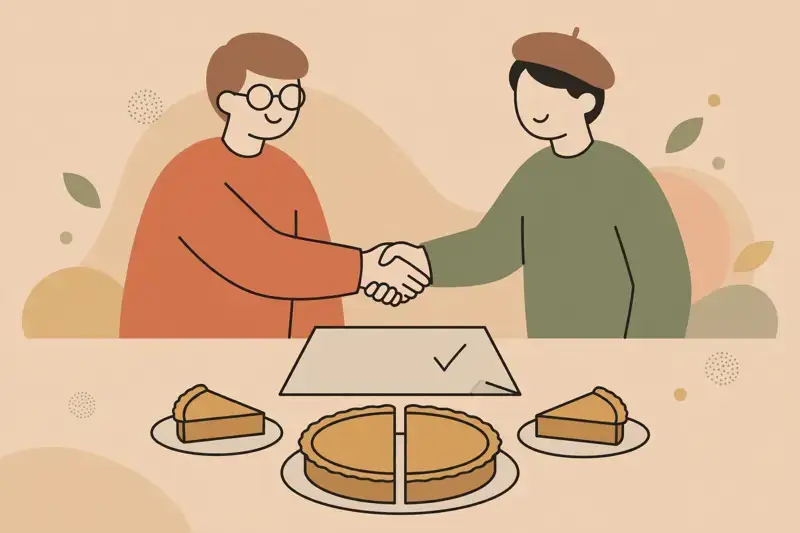
Walking away is not failure. Taking a bad deal because you could not walk away is failure. Every bad deal you decline makes room for a good one, and teaches the market that your yes means something.
Lesson 12
The best negotiation is one where both sides feel good, because most negotiations are not one-time events. The salary talk starts an employment relationship. The vendor haggle starts a partnership. Squeezing the last dollar out of someone you will work with for years is a terrible trade.
Leave something on the table deliberately. A small concession at the end, given freely, turns a transaction into goodwill. People remember how a negotiation felt long after they forget the numbers. Felt-fair beats won-by-a-landslide.
Graduation
You now know the craft: everything is negotiable, preparation wins, your alternative is your power, let them anchor, use silence, always counter, trade instead of conceding, stay warm and firm, negotiate interests, write it down, mean your walk-away, and leave them happy. That is negotiation without the jerkery. Use it on salaries, prices, and rates, and watch how much of life was negotiable all along.
Keep learning
This course is part of Starvard University, striving for greatness.