Starvard University · Home Buying
A home is the biggest purchase most people ever make, and the process is designed to confuse you. This course walks the whole path in plain English: what you can afford, how mortgages work, and how to avoid the expensive mistakes.

The whole course in brief
Twelve lessons in ten points. The rest is paperwork.
The twelve lessons
Lesson 1
Buying is not automatically smarter than renting. It depends on three things: how long you will stay, what homes cost versus rents in your city, and how stable your life is. The transaction costs of buying and selling eat roughly 8 to 10 percent of the price. Stay less than five years and renting usually wins.
Run a rent-versus-buy calculator with honest inputs: your rent growth, home price growth, taxes, insurance, maintenance, and the opportunity cost of the down payment sitting in investments instead. The calculators are free online. The answer surprises people in both directions.
Also weigh the non-financial side. Owning means control: paint the walls, get the dog, build the deck. It also means every broken thing is your problem at 2 a.m. Renting means flexibility and a landlord to call. Neither is morally superior. Pick the one that fits your actual life.
Lesson 2
The classic rule: keep your total monthly housing cost under 28 percent of your gross monthly income. Total means everything: mortgage principal and interest, property taxes, homeowners insurance, and HOA dues. A $2,000 mortgage on a $7,000 monthly income is right at the line.
Lenders will happily approve you for more. Their number is the maximum they can sell you, not the maximum you should spend. Being "house poor," with every dollar feeding the mortgage, is miserable. Leave room to save, to live, and to fix the things that will break.
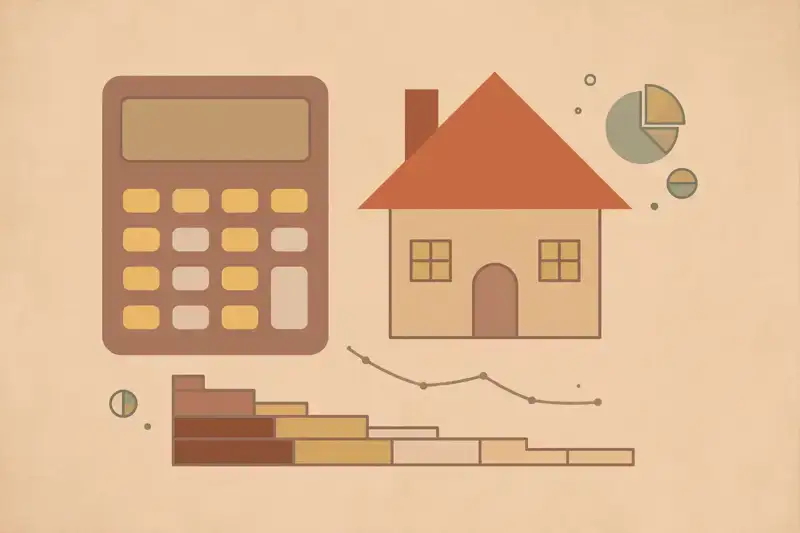
Do the budget on paper before you fall in love with a house. List your income, subtract every real expense, and see what is left for housing with savings intact. The house you can comfortably afford is always smaller than the house you can technically qualify for. Buy the comfortable one.
Lesson 3
Your credit score decides your mortgage rate, and the rate decides everything. On a $350,000 loan, the difference between a 6 percent and a 7 percent rate is about $200 a month, which is over $70,000 across 30 years. A few score points are worth real money.
Start fixing your credit a year before you shop. Pay every bill on time (payment history is the biggest factor), pay down card balances below 30 percent of their limits, and do not open new credit or close old cards while you prepare. Dispute any errors on your reports; they are common and fixable.
Do not finance anything big in the months before closing: no car loans, no furniture on credit, no new cards. Lenders re-check your credit before funding, and new debt can kill the loan at the finish line. Freeze your borrowing until the keys are in your hand.
Lesson 4
Twenty percent down is the classic target because it avoids private mortgage insurance (PMI), but it is not required. Conventional loans allow as little as 3 to 5 percent, FHA loans 3.5 percent, and VA and USDA loans can be zero down for those who qualify. Smaller down payments mean PMI, which is an extra monthly cost until you build enough equity to drop it.
The real target is not just the down payment. You also need closing costs (2 to 5 percent of the price), moving expenses, immediate repairs, and a separate emergency fund. Buying a house and emptying your savings on the same day is how small problems become crises.
Save in a high-yield savings account, not investments. The timeline is short and the money must be there when you need it. Automate a monthly transfer and treat it like a bill. Watching the number grow is the most motivating part of the whole process.
Lesson 5
Start online to learn the market: what $400,000 actually buys in your target neighborhoods, how long listings sit, and what sells over asking. Then go see homes in person, because photos lie about light, noise, smells, and neighbors. Visit at different times of day.
Make two lists before you tour: must-haves and nice-to-haves. Must-haves are few and firm: commute range, bedrooms, budget ceiling. Everything else is negotiable. Buyers who tour without a list fall in love with staging and overpay for vibes.
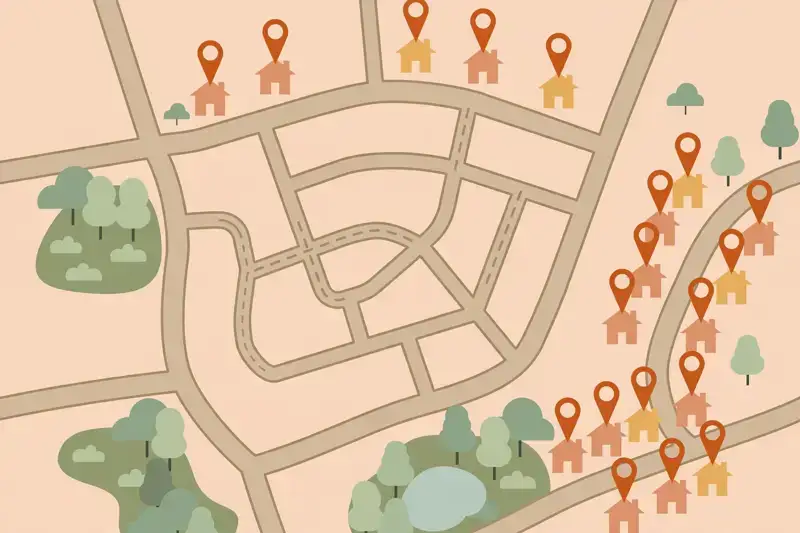
Location beats the house itself. You can renovate a kitchen; you cannot renovate a neighborhood, a commute, or a school district. Drive the commute at rush hour. Walk the block at night. The house is the easy part to change.
Lesson 6
Pre-approval is a lender's written commitment of how much they will lend you, based on verified income, debts, and credit. It is not a pre-qualification (a rough guess). Sellers take pre-approved buyers seriously, and in competitive markets an offer without one goes straight in the trash.
Shop at least three lenders: a bank, a credit union, and a mortgage broker. Rates and fees vary more than people think, and a quarter-point difference is thousands of dollars. Compare the Loan Estimate forms line by line; they are standardized so you can actually compare.
Understand the loan types at a high level. A 30-year fixed is the default for a reason: predictable payments. A 15-year fixed builds equity fast but costs more monthly. Adjustable-rate mortgages start cheaper and can spike later. For a first home, boring and predictable wins.
Lesson 7
A good buyer's agent is worth their weight in gold: they know the neighborhoods, spot overpriced listings, negotiate repairs, and quarterback the avalanche of paperwork. A bad one just unlocks doors. Interview at least three agents before committing.
Ask how many buyers they have represented in your price range and neighborhoods in the last year, how they handle multiple-offer situations, and whether they will be honest when a house is wrong for you. The right answer to the last one is an enthusiastic yes with examples.
Buyer's agents are typically paid from the seller's proceeds, so a good agent usually costs you nothing out of pocket. That makes the interview pure upside. Never feel locked in: if the agent is not serving you, the agreement can usually be ended.
Lesson 8
Never, ever skip the inspection. For a few hundred dollars, a licensed inspector crawls through the attic, the crawlspace, and every system in the house, then hands you a report of what is wrong. This is the best money in the entire transaction.
Attend the inspection in person. You will learn more in three hours walking the house with the inspector than in thirty hours of online research. Ask what is urgent, what is normal aging, and what to budget for in the next five years.
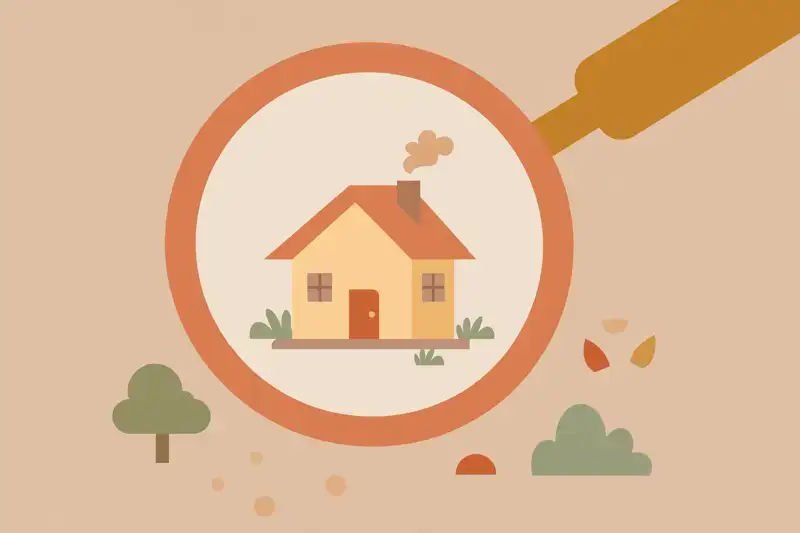
Use the report strategically. Major issues (roof, foundation, electrical, plumbing) justify asking for repairs, credits, or a price reduction. Minor issues are just your future to-do list. In hot markets you may face pressure to waive the inspection; understand you are gambling the biggest purchase of your life to win a bidding war.
Lesson 9
An offer is more than a price. It includes your earnest money deposit, contingencies (inspection, appraisal, financing), the closing timeline, and requests like repairs or appliances. In a multiple-offer situation, clean terms can beat a higher price: fewer contingencies and flexible timing are catnip to sellers.
Lean on comparable sales, not the listing price. Your agent pulls recent sales of similar homes nearby; that is what the house is worth. Falling in love with a house does not change its market value, and overpaying by $30,000 takes years to recover.
Be ready to walk away. The strongest negotiating position is genuine willingness to lose the house. There will be another one. Buyers who cannot walk away overpay, waive protections, and regret it. Set your max before the emotions start, and honor it.
Lesson 10
Closing costs run 2 to 5 percent of the purchase price, paid on top of the down payment. On a $400,000 home, that is $8,000 to $20,000. They include lender fees, title insurance, appraisal, prepaid taxes and insurance, and recording fees. First-time buyers are routinely blindsided by this number.
You get a Closing Disclosure three business days before closing. Read every line. Compare it to the original Loan Estimate; big unexplained jumps are worth questioning. Errors happen, and this is your last chance to catch them.
Some costs are negotiable and some are shoppable: title insurance, survey fees, and lender charges can often be reduced by asking or comparing providers. Nobody will volunteer a discount. Ask for everything, politely, in writing.
Lesson 11
Closing day is a signing marathon: the mortgage note, the deed, and a stack of disclosures. Bring a cashier's check or wire for the exact amount, a photo ID, and patience. Read before you sign, and ask about anything you do not understand. This is not the moment to skim.
Once the deed records, the house is yours. First jobs: change every exterior lock, locate the water shutoff and breaker box, test smoke and CO detectors, and forward your mail. These take an afternoon and prevent the classic first-week disasters.
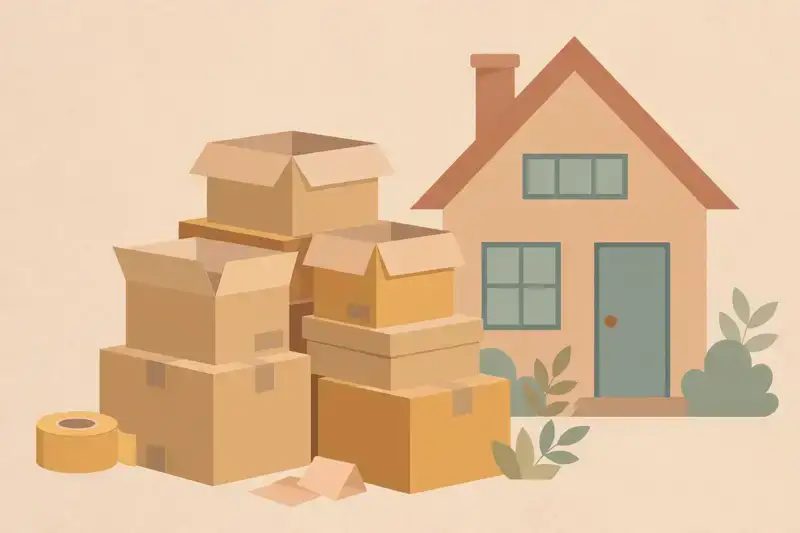
Move in slowly if you can. Live in the house a few weeks before buying furniture or starting projects. You will learn how the light moves, which rooms you actually use, and what truly needs fixing. Impulse renovating in week one is how budgets die.
Lesson 12
Budget 1 to 2 percent of the home's value per year for maintenance, more for older homes. The water heater will die on a holiday weekend. The roof has a lifespan. A dedicated home repair fund, fed monthly, turns emergencies into errands.
Build a maintenance calendar: furnace filter quarterly, gutters twice a year, dryer vent yearly, water heater flush yearly, and a full walk-around each spring and fall. An hour of prevention beats a weekend of repair and a month of regret.
Finally, resist lifestyle creep. The house will tempt you with endless upgrades. Fix what is broken, improve what you use daily, and let the rest wait. A paid-off-feeling home you can afford beats a showcase home that owns you.
Graduation
You now know the whole path: the math, the credit, the team, the inspection, the negotiation, and the first year. Buying a home is a series of small smart decisions, not one giant leap. Make them in order, and the biggest purchase of your life becomes simply the best one.
Keep learning
This course is part of Starvard University, striving for greatness.