Starvard University · Economics
Why your coffee costs what it costs, why rent keeps rising, and why some countries get rich while others stay poor. The few big ideas that explain all of it.

The whole course in brief
Twelve lessons, twelve big ideas.
The twelve lessons
Lesson 1
Economics is not about money. It is about choice under scarcity. You cannot have everything, so every choice has a cost: the next best thing you gave up. That is opportunity cost, and it is the single most useful idea in this course. The cost of college is not just tuition; it is four years of full-time wages you did not earn.
Once you see opportunity cost, you see it everywhere: in your calendar, in government budgets, in relationships. Every "yes" is a thousand quiet "no"s. Economists just insist on making the trade-offs visible instead of pretending they do not exist.
Lesson 2
Price is a messenger. When buyers want more than sellers offer, the price rises, which tells sellers to make more and tells some buyers to back off. When sellers have more than buyers want, the price falls. Left alone, price moves until the amount buyers want matches the amount sellers bring. That balance point is equilibrium.
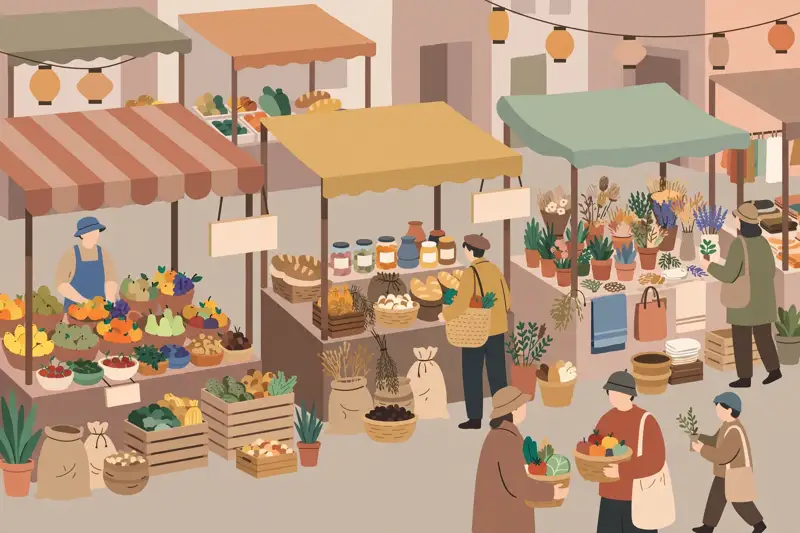
This is why price controls usually backfire. Cap rents below equilibrium and landlords stop building and maintaining; you get a shortage. Set a minimum price above equilibrium and you get a surplus nobody buys. The messenger got shot, so the market cannot coordinate.
Lesson 3
Tell people what gets rewarded and they will do more of it, often in ways you did not expect. Pay CEOs in stock options and they will pump the short-term stock price. Fine parents for picking kids up late from daycare and late pickups INCREASE, because the fine turned guilt into a price anyone could pay.
This cuts both ways. Good policy is mostly good incentive design: charge for carbon and emissions fall; reward the behavior you want and you get more of it. Before any rule or plan, ask: what will a clever person do in response to this? Then design for that person.
Lesson 4
Trade is not a contest with a winner and a loser. When you buy coffee, you value the coffee more than the dollars and the seller values the dollars more than the coffee. Both sides win or the trade does not happen. That is true between people and between countries.
Comparative advantage is the deeper magic: even if one country is better at making EVERYTHING, both countries still gain by specializing in what they are relatively best at and trading. This is why protectionism usually costs the protecting country more than it saves. The jobs "saved" are visible; the higher prices everyone pays are invisible.
Lesson 5
Inflation is a rise in the general price level, which is the same as a fall in what each dollar buys. A little (around 2% a year) is normal and even healthy. A lot destroys savings, punishes anyone on a fixed income, and scrambles every price signal in the economy.
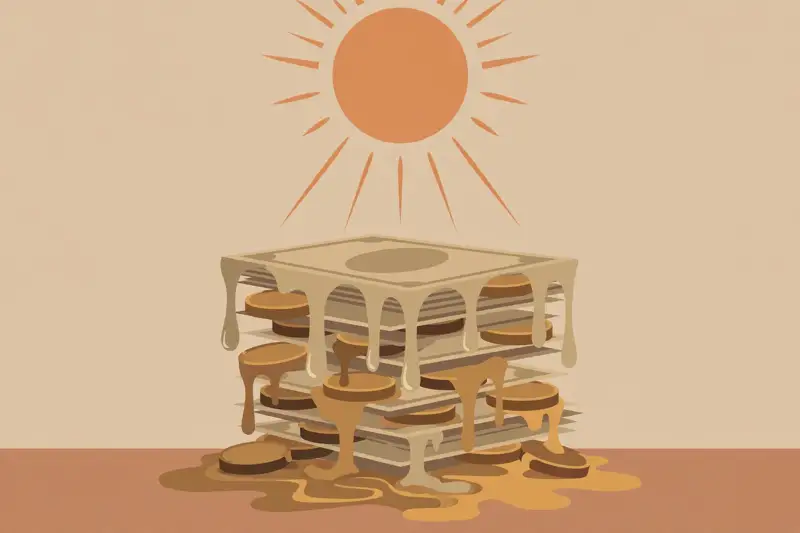
Where does it come from? Too much money chasing too few goods. Governments that print money to pay bills get hyperinflation and wrecked economies; history is full of wheelbarrows of cash buying a loaf of bread. Your defense is real assets and real skills: inflation melts cash, but it cannot melt your ability to do valuable work.
Lesson 6
Your wage is roughly the value of what you add, as the market sees it. Harsh but clarifying: to earn more, become someone whose work creates more value, or scarcer value. Credentials help only insofar as they signal that.
This is why minimum wage debates are really about trade-offs. Raise the floor and some workers earn more; some jobs get automated or disappear. Both sides can cite real evidence because both effects are real. The honest question is never "does it help or hurt" but "who does it help, who does it hurt, and by how much."
Lesson 7
Markets are amazing coordinators, but they fail in predictable ways. Pollution is the classic: the factory gets the profit, everyone downwind gets the smoke. Economists call this an externality, a cost dumped on people who never agreed to the deal. The fix is to put the cost back on the decider: pollution taxes, cap and trade.
Other failures: public goods like national defense that nobody would pay for alone but everyone needs, and information gaps where the seller knows the used car is a lemon and you do not. Government exists largely to handle these failures. The art is knowing which problems are market failures and which are just outcomes you do not like.
Lesson 8
Two hundred years ago nearly everyone was desperately poor. Then some countries took off and others did not. The difference was not natural resources (plenty of resource-rich countries are poor). It was institutions: property rights, rule of law, open markets, and the freedom to try, fail, and try again.
Growth compounds like interest. A country growing at 2% doubles living standards in 35 years; at 7% it takes 10. That is why the growth rate is the most important number in economics. Everything else, aid, charity, redistribution, is rounding compared to sustained growth.
Lesson 9
The interest rate is the price of money over time. When the central bank raises rates, borrowing gets expensive: mortgages, car loans, and business expansion all slow down, and inflation cools. Cut rates and the opposite happens: cheap money, more spending, more jobs, and eventually more inflation.
This is a blunt tool wielded on a delay, like steering a ship with a slow rudder. Raise too fast and you cause a recession; too slow and inflation runs hot. That is why markets hang on every word from central bankers. You do not need to trade on it, but you should understand it: rates shape your mortgage, your job market, and your savings.
Lesson 10
Standard economics assumes rational people. Behavioral economics studied actual people and found a catalog of glitches. Loss aversion: losing $100 hurts about twice as much as gaining $100 feels good. Present bias: we overvalue now and undervalue later, which is why saving is hard. Anchoring: the first number you hear warps every number after.
Knowing the glitches does not remove them, but it lets you design around them. Automatic savings beats willpower because it removes the daily choice. Cooling-off periods beat impulse because the present bias fades. The rational move is to assume you are irrational and build systems accordingly.
Lesson 11
Taxes are the price of civilization, and also the price of a lot of waste. Every tax distorts something: income taxes slightly discourage work, sales taxes slightly discourage buying, property taxes discourage improving property. The question is never "taxes good or bad" but "what does this tax discourage, and is the spending worth it?"
Government spending gets the same trade-off lens. A dollar spent on roads that unlock commerce can return many dollars. A dollar spent on a program that does not work is a dollar taxed from someone who would have used it. Follow the money and ask what it bought. That habit makes you a better citizen than any party label.
Lesson 12
The toolkit, on one card: opportunity cost (what did I give up?), incentives (what does this reward?), margins (is the NEXT unit worth it?), trade-offs (who gains, who pays?), and "and then what?" (second-order effects). Run any policy, purchase, or plan through those five and you will outthink most pundits.
Economists are often wrong about specifics and right about patterns. Do not use this course to win arguments at dinner. Use it to make better decisions with your money, your vote, and your career. The world runs on incentives and trade-offs; now you can see the wiring.
Graduation
Scarcity forces choices, prices carry information, incentives drive behavior, trade creates wealth, and growth compounds everything. Five ideas, and suddenly the news makes sense: why the central bank moved rates, why the trade deal matters, why the new tax will do the opposite of what its name promises. You do not need a degree. You need the toolkit, and now you have it.
Keep learning
This course is part of Starvard University, striving for greatness.